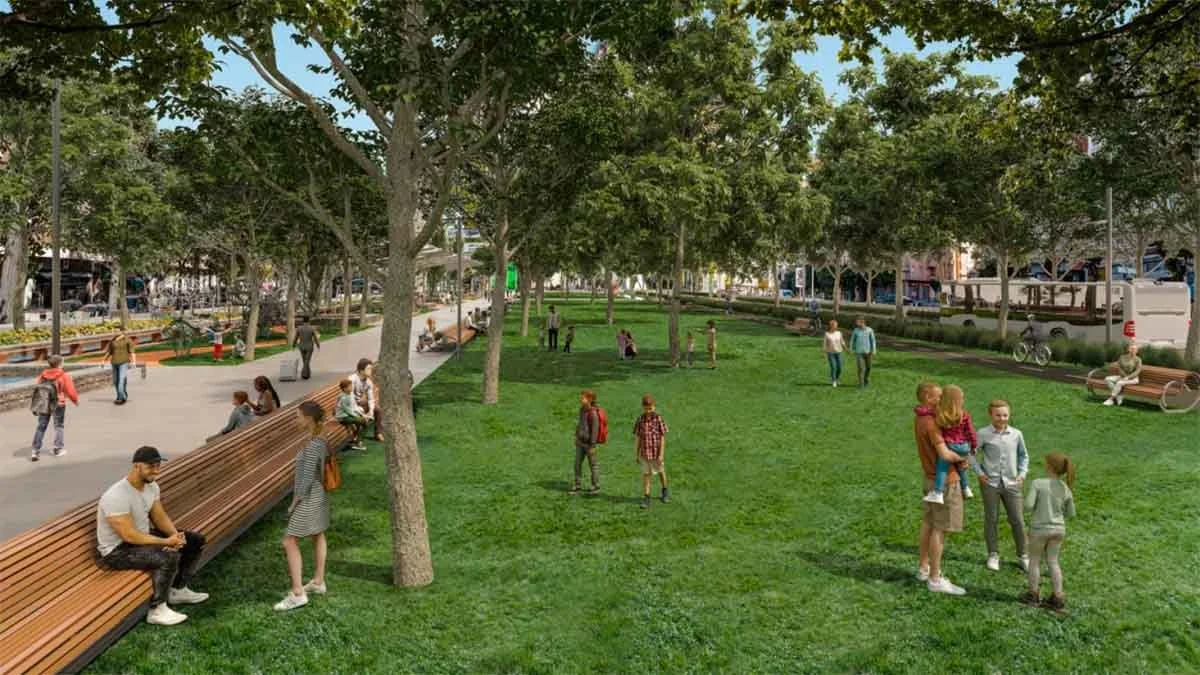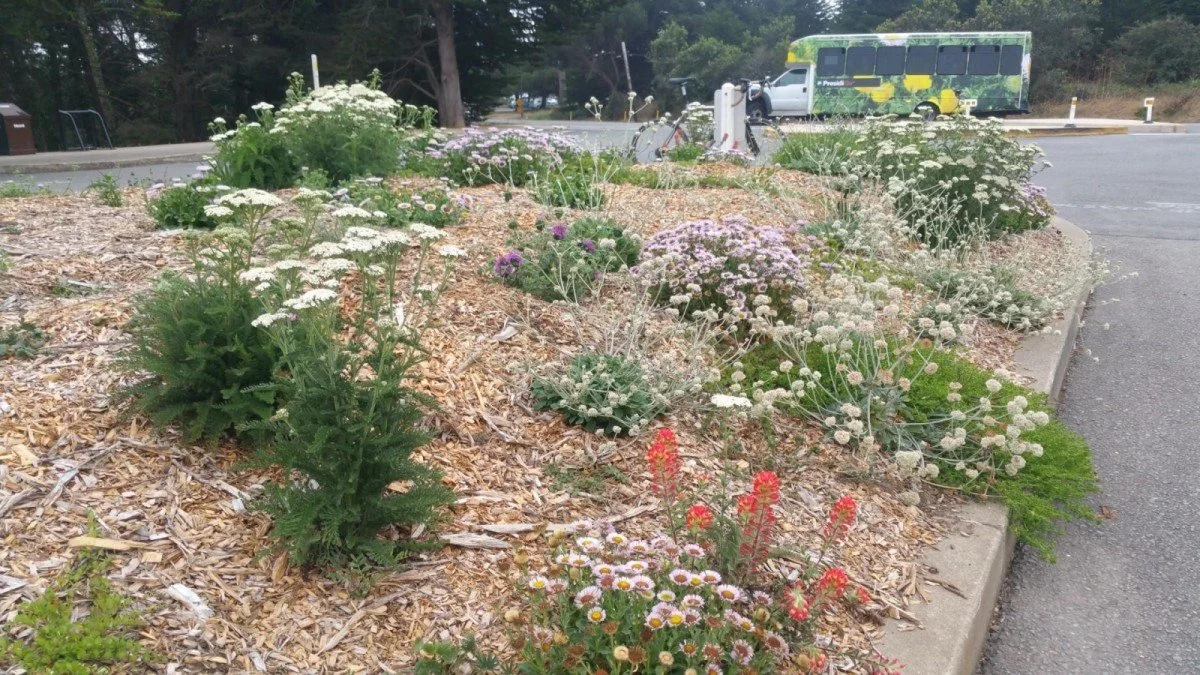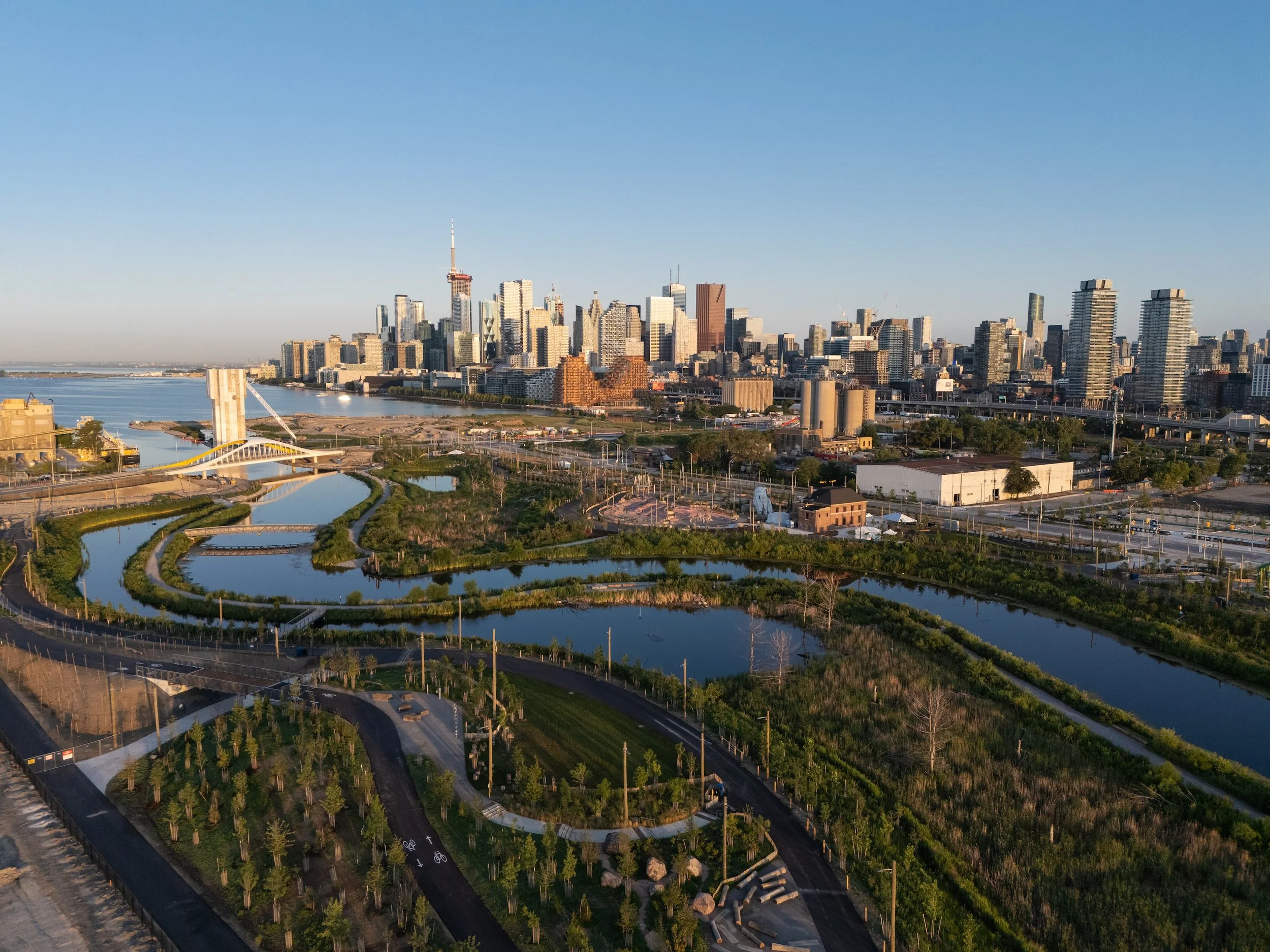
Newly opened Biidaasige Park in Toronto. Image source: designlines
biophilic cities network | seeds, roots + shoots
2025 annual report
The Biophilic Cities Network is a global collaboration of partner cities, organizations, and individuals committed to working in concert to conserve and celebrate nature in all its forms. Our efforts aim to highlight the many important ways in which cities and their inhabitants benefit from the biodiversity and wild urban nature spaces present in cities.
Our Home city joins as a New Partner City
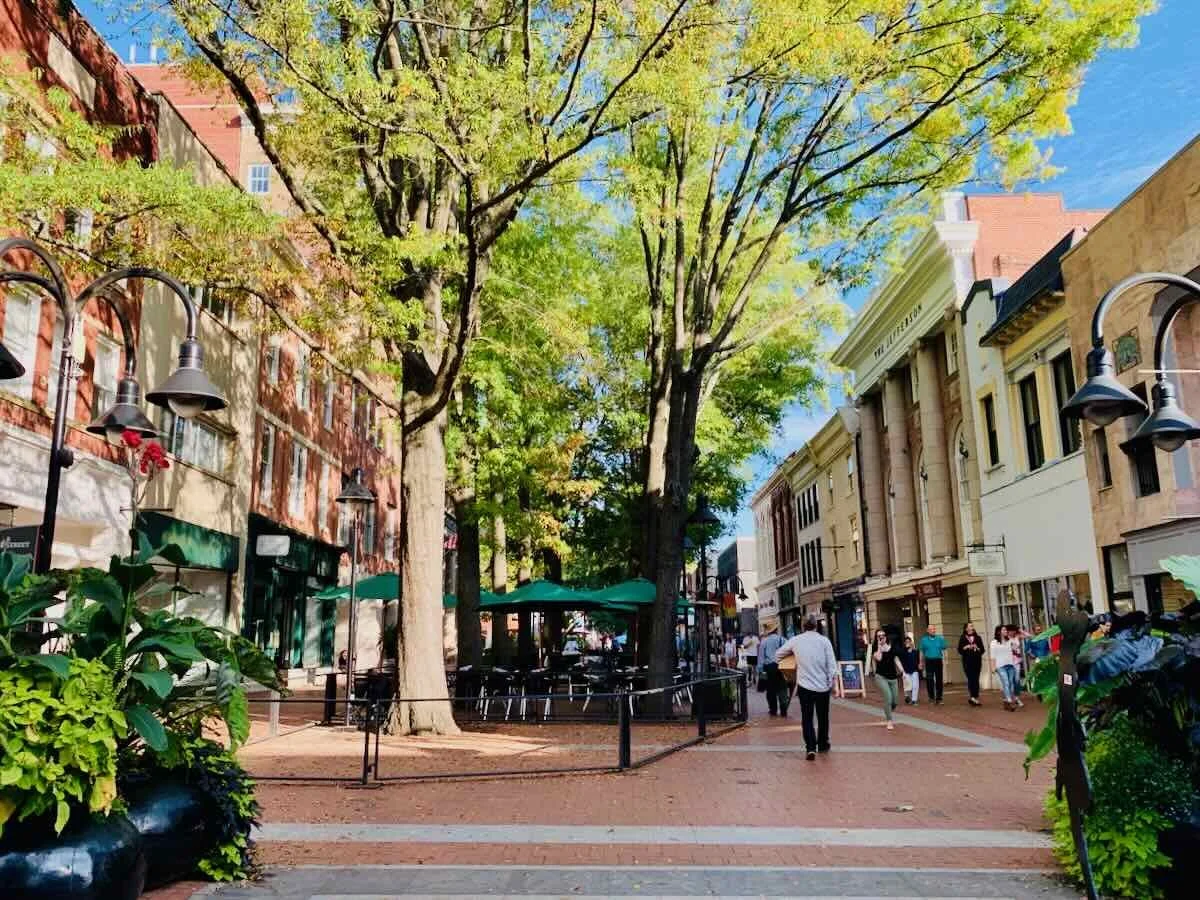
The past year saw the addition of our home city of Charlottesville, Virginia. Visit their partner city page to learn more about this small city nestled in the foothills of the Blue Ridge Mountains, its many projects and programs, and its vision for a biophilic future for its residents.
Publications
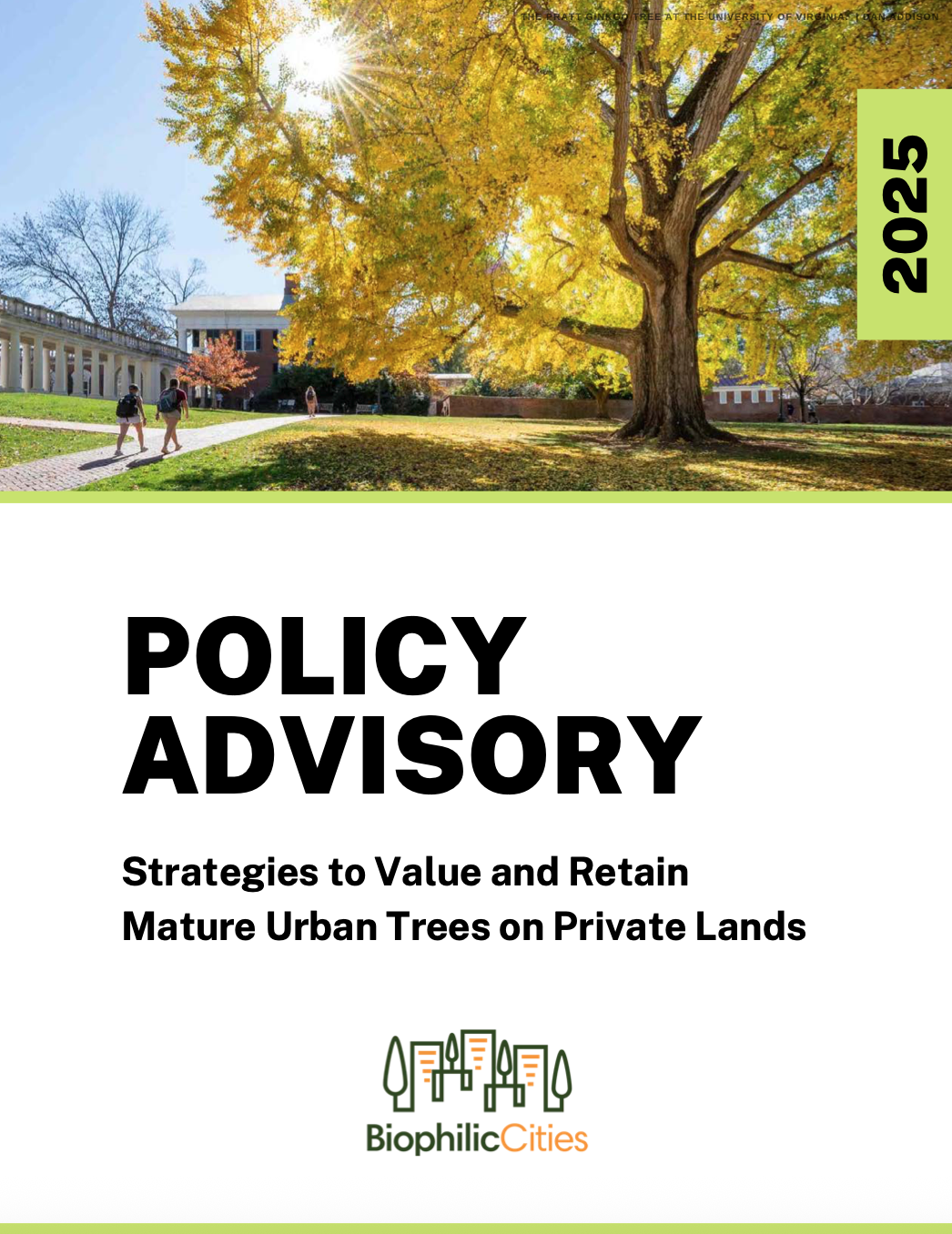
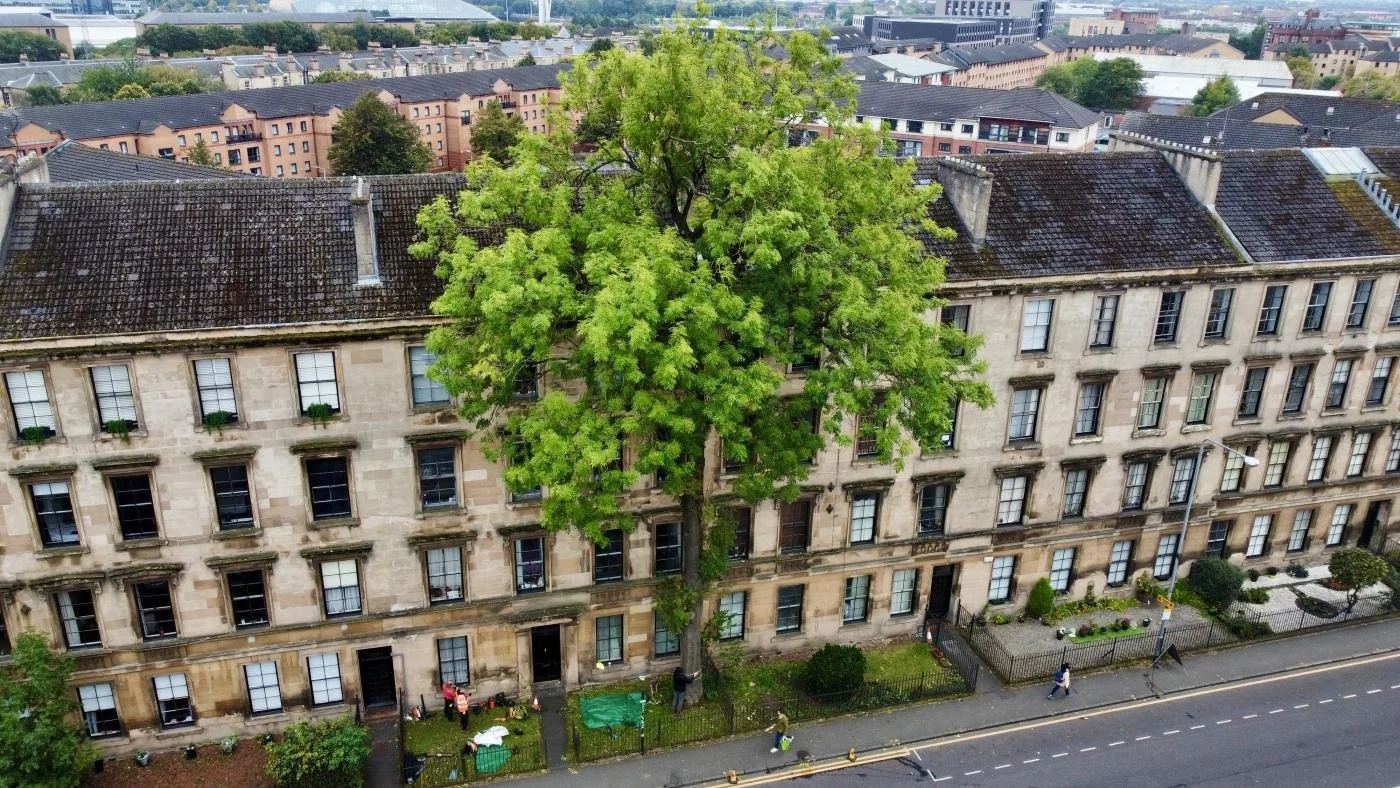
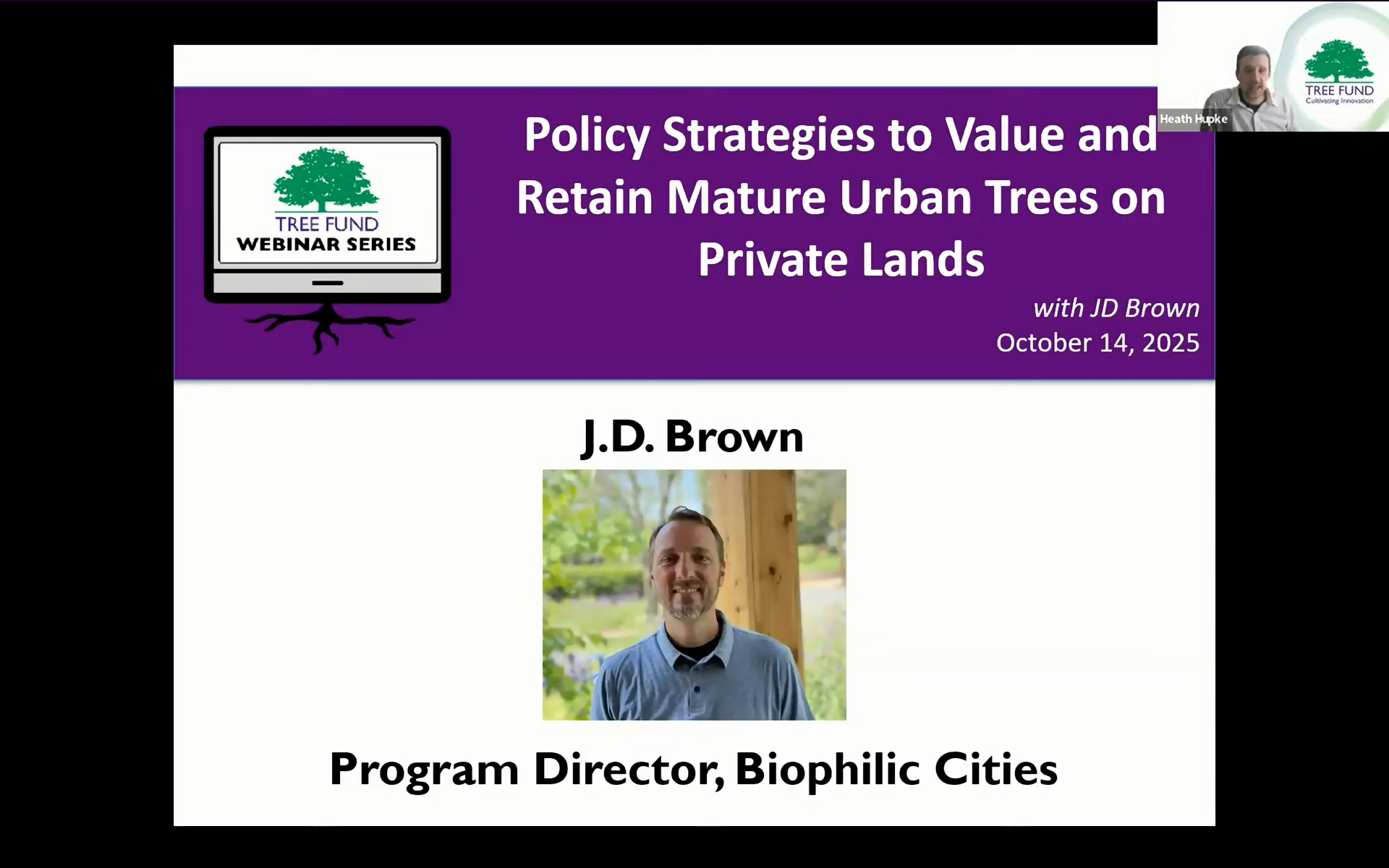
Policy Toolkit: Protecting Mature Urban Trees On Private Lands
This toolkit introduces and provides links to strategies to value and retain mature urban trees that are underway in one form or another in cities across the US and internationally. A four-step policy roadmap provides the structure for the toolkit and its accompanying policy advisory. The toolkit will continue to be developed and augmented with new and updated strategies. This will be an ongoing initiative of the Center for Forest Urbanism at the University of Virginia School of Architecture.
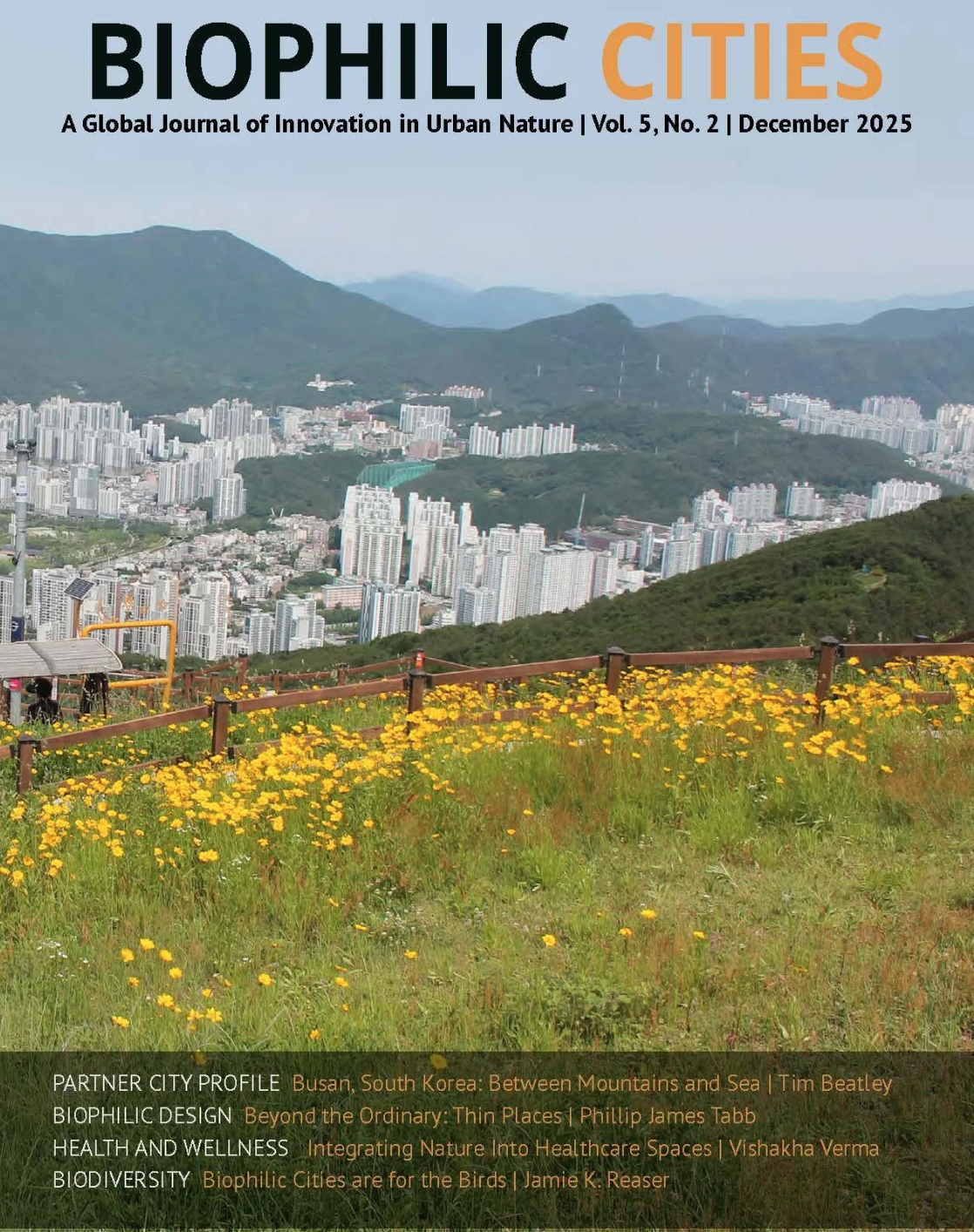
Visit the Mature Urban Tree Policy page to read the advisory and to find links to strategies to protect mature trees underway in global cities.
events
The Vision and Practice of Forest Urbanism Symposium
Over the course of two days, participants engaged in a multidisciplinary exploration of the essential role of trees and forests in urban landscapes. Sessions introduced the work of the CFU fellows with backgrounds in art, music, and psychology; innovative law and policy aiming to preserve mature urban trees; case studies in tree-friendly development practices; and engagement initiatives from the local Charlottesville community.
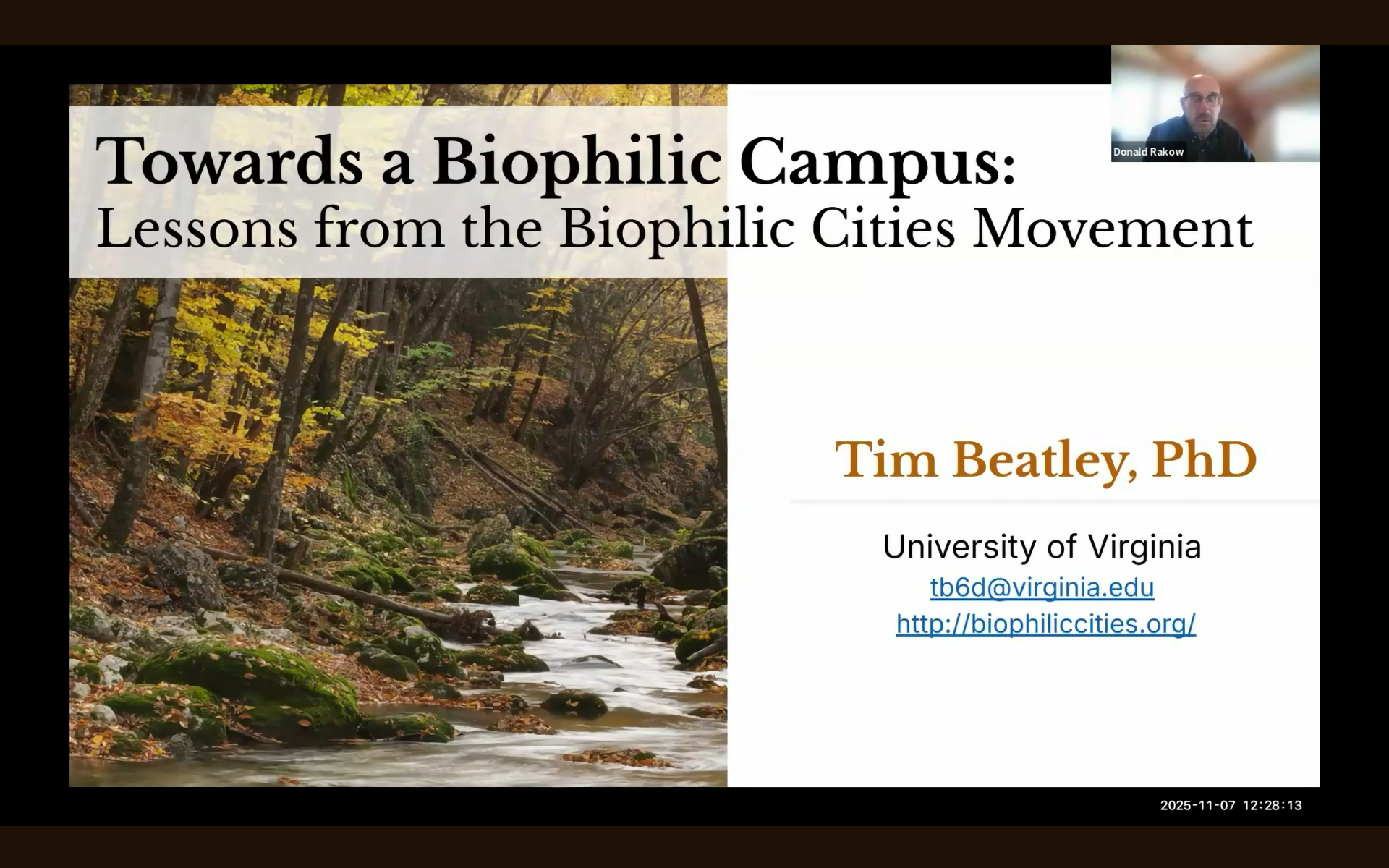

Films
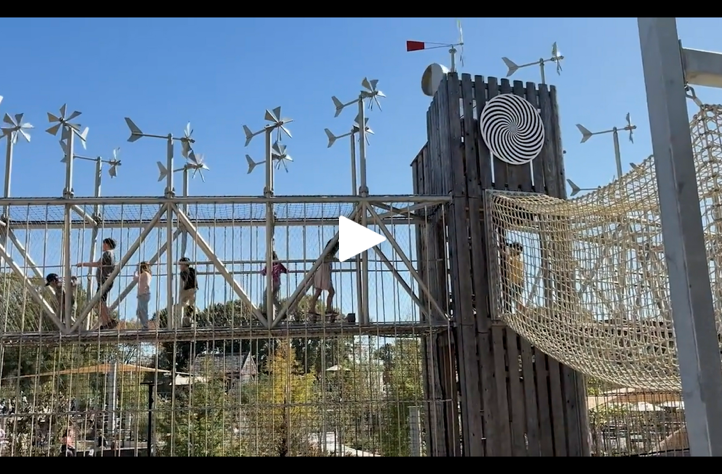
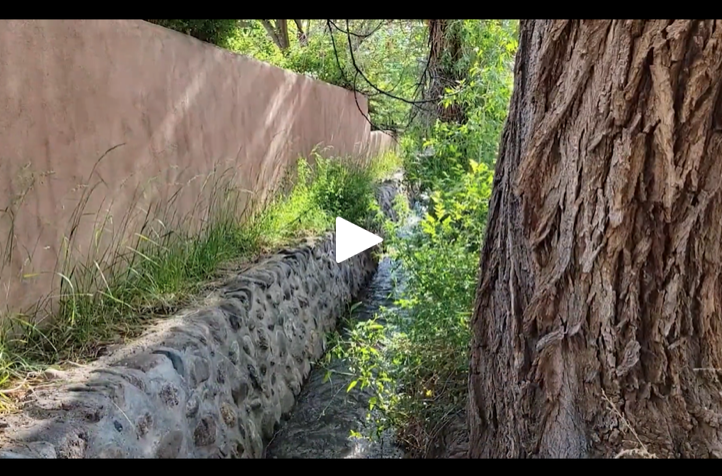
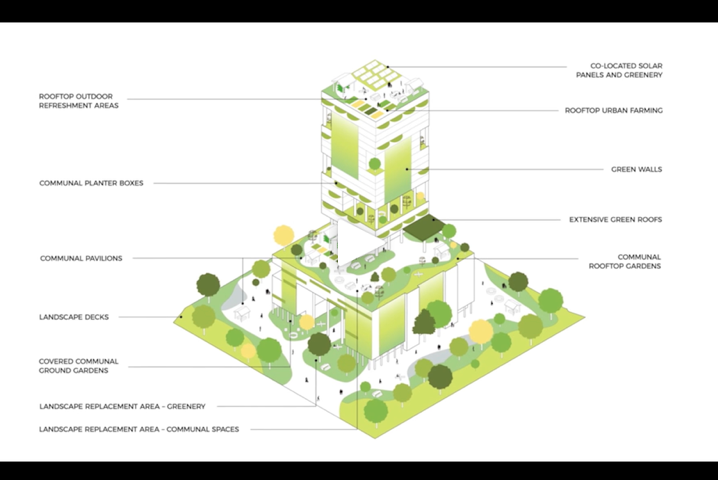
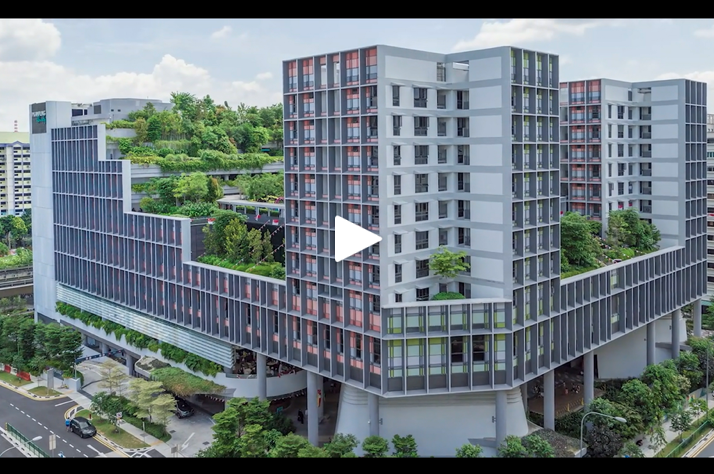
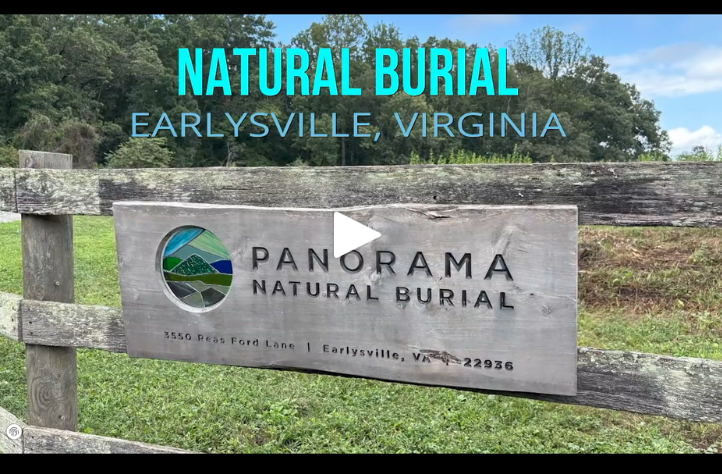
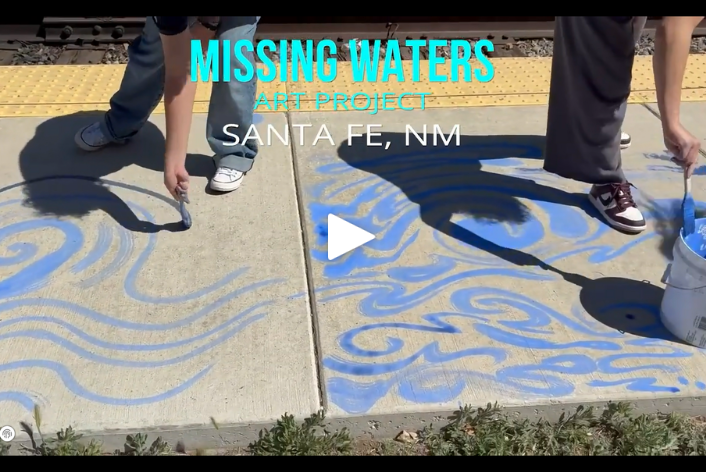
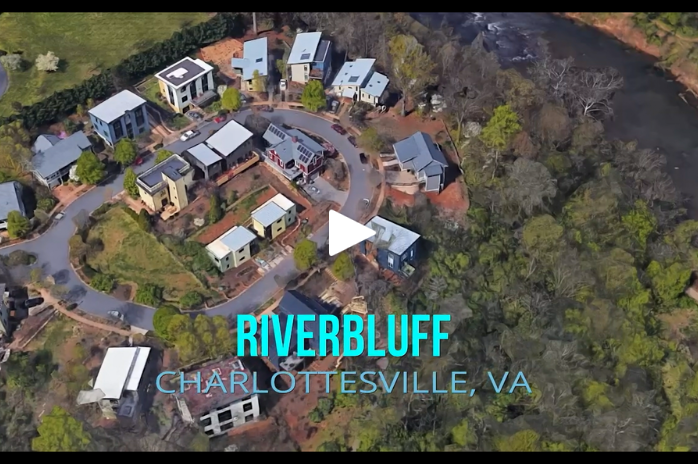
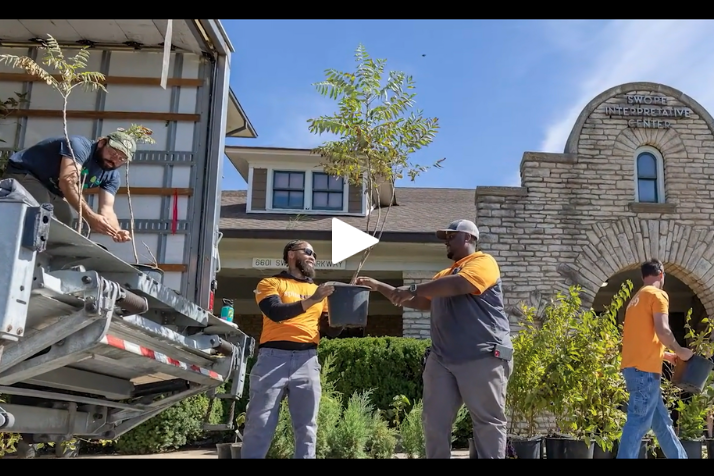
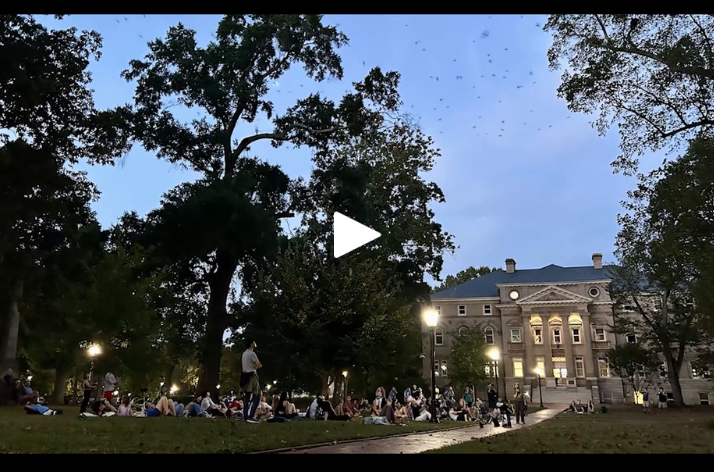
Expert Presentations
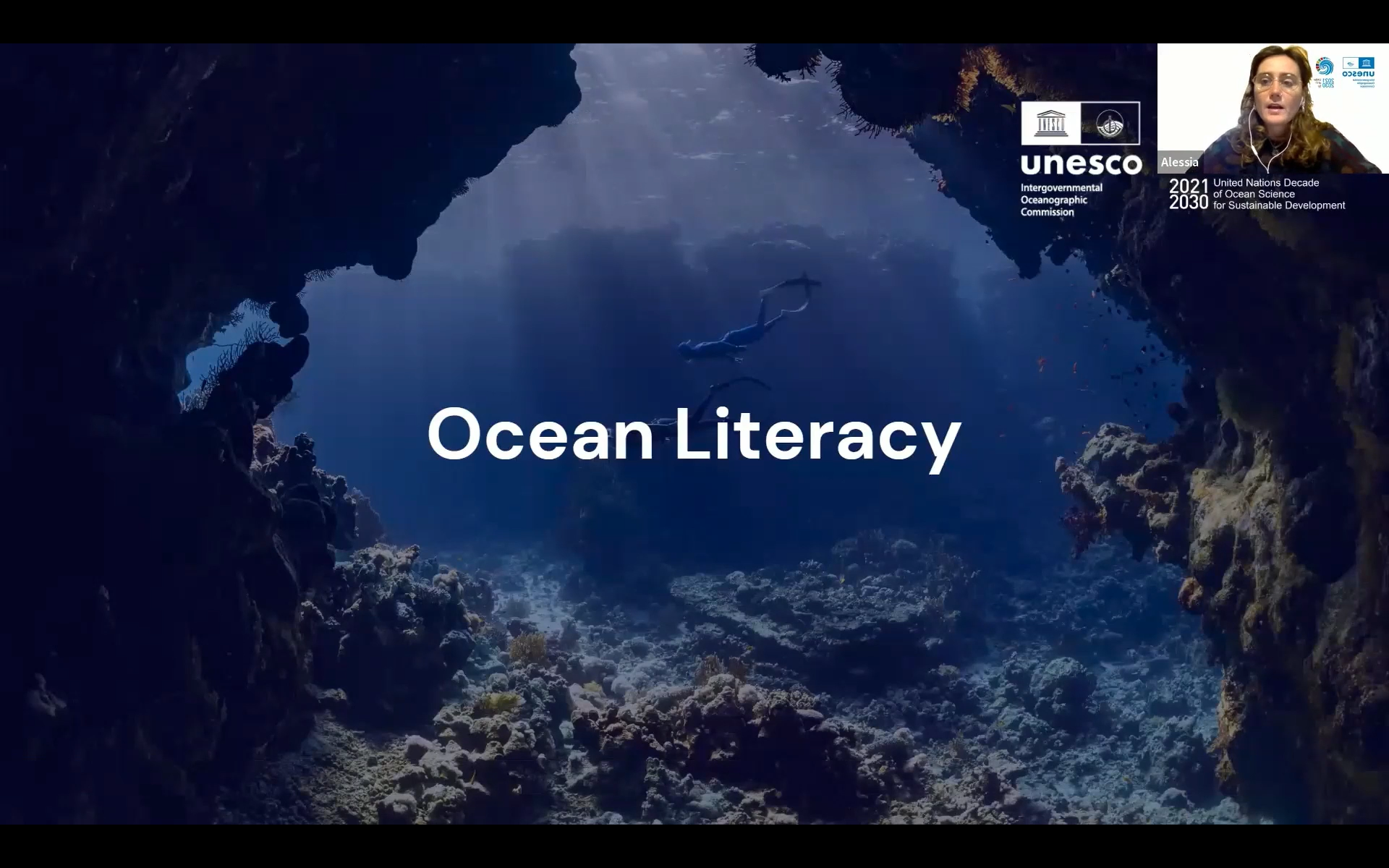
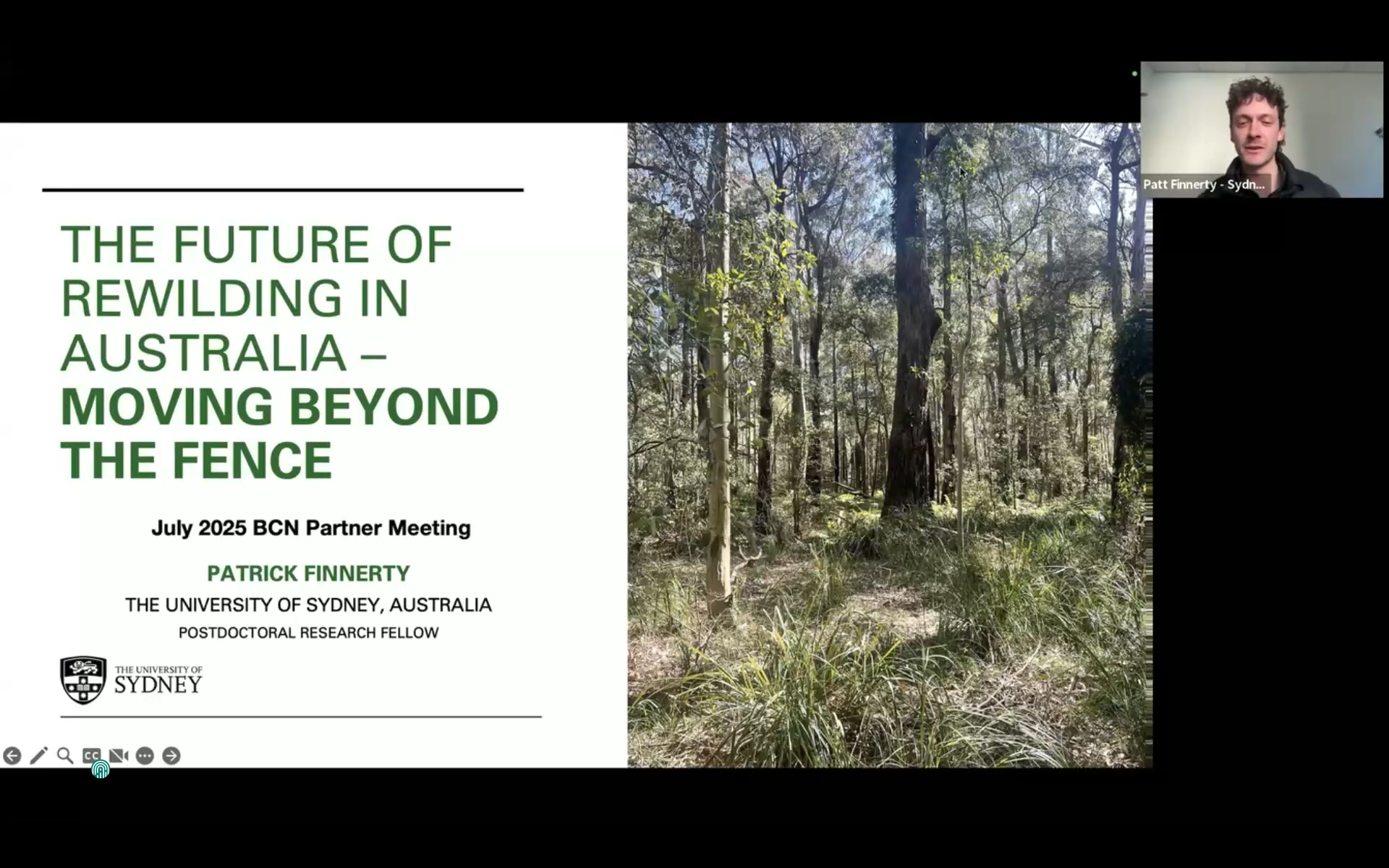
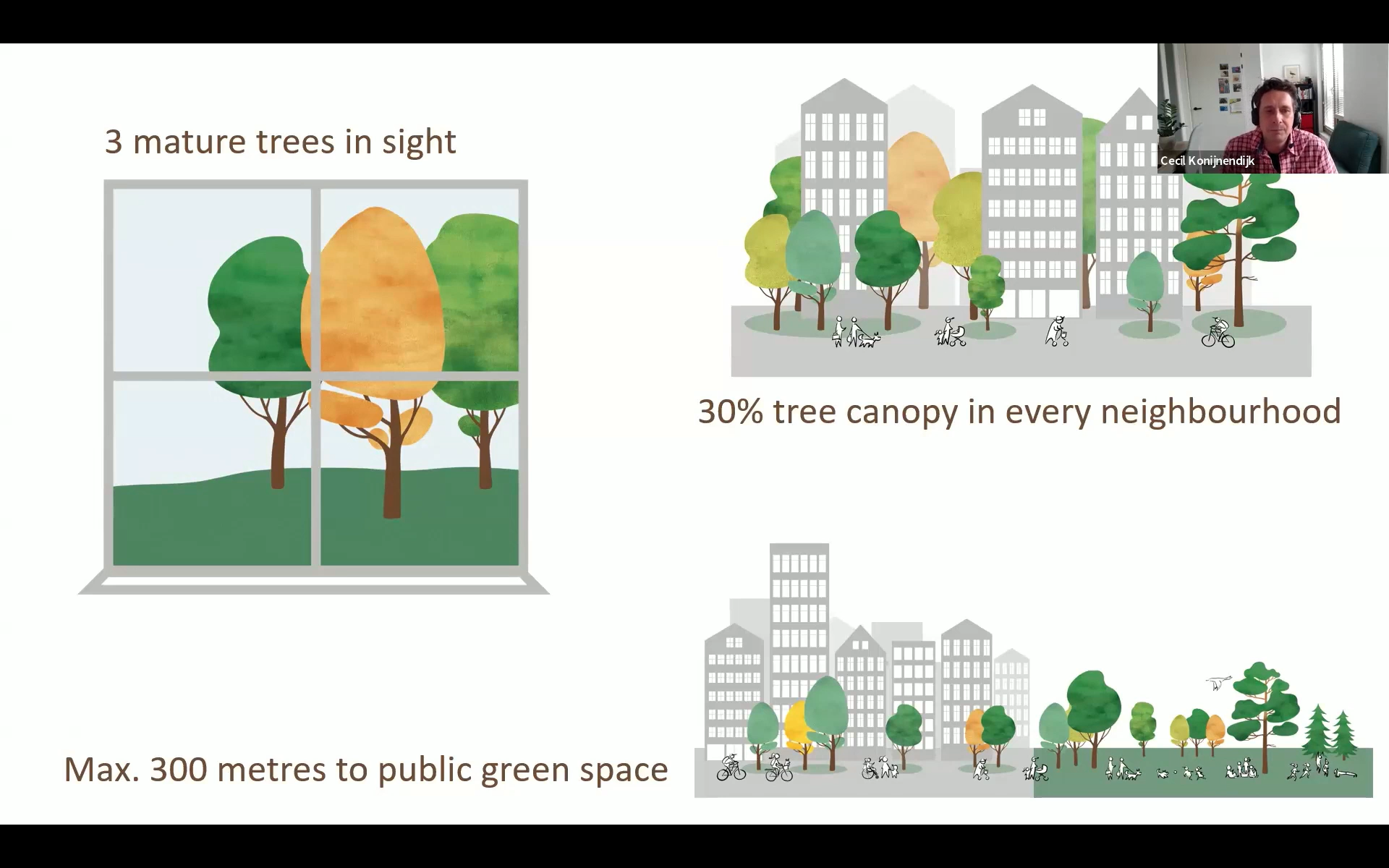
GRAND CHALLENGES: Highlighting our Partners

Facilitated by a network platform, partners collectively pursue eight grand challenges. Through annual reporting, partners communicate progress towards biophilic aspirations and network grand challenges.
Challenge 1: Abundant Biodiversity
“To embrace the ethical obligation to promote native species diversity for the sake of humans and nonhumans alike; To reverse wherever possible losses in species biodiversity, native habitat, and ecological connectivity; To envision cities as arks where biodiversity can co-exist, regenerate and even flourish with urban density.”
Vitoria-Gasteiz, Spain
Vitoria-Gasteiz, Spain, advanced urban biodiversity through the Los Herrán Avenue transformation, converting a major traffic corridor into a green corridor with 180 native trees, over 15,000 shrubs, permeable surfaces, and sustainable drainage systems, paired with ongoing ecological monitoring of soils, vegetation, and fauna.
Toronto, Canada
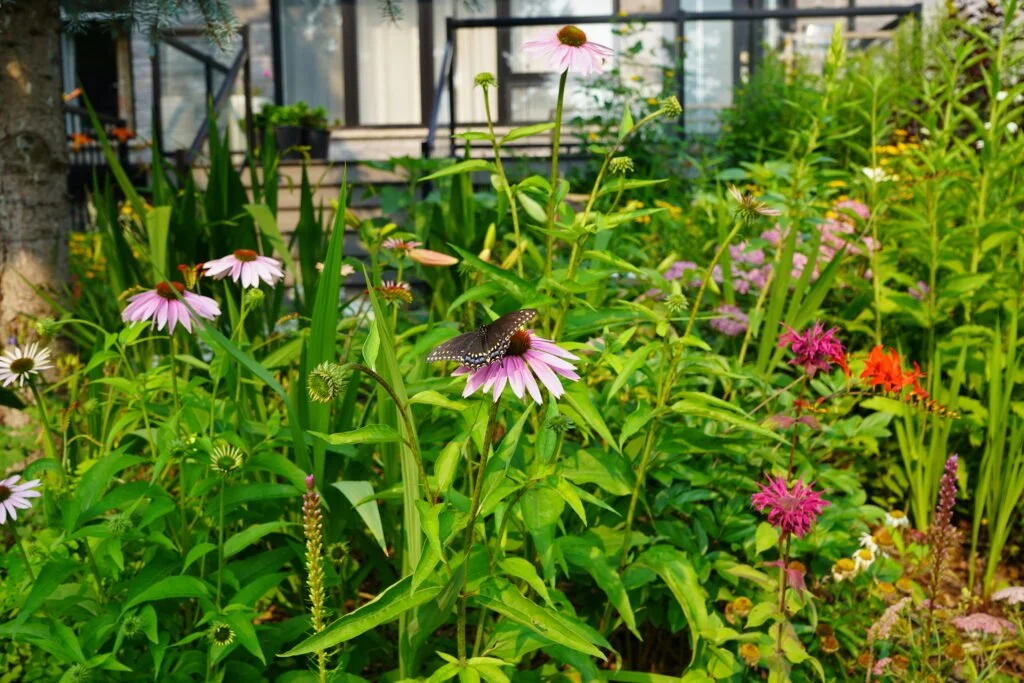
Toronto, Canada, expanded urban biodiversity through the PollinateTO Grants Program, funding 34 new pollinator gardens in 2025 and contributing to a citywide network of more than 500 pollinator habitats embedded across neighborhoods.
Raleigh, NC
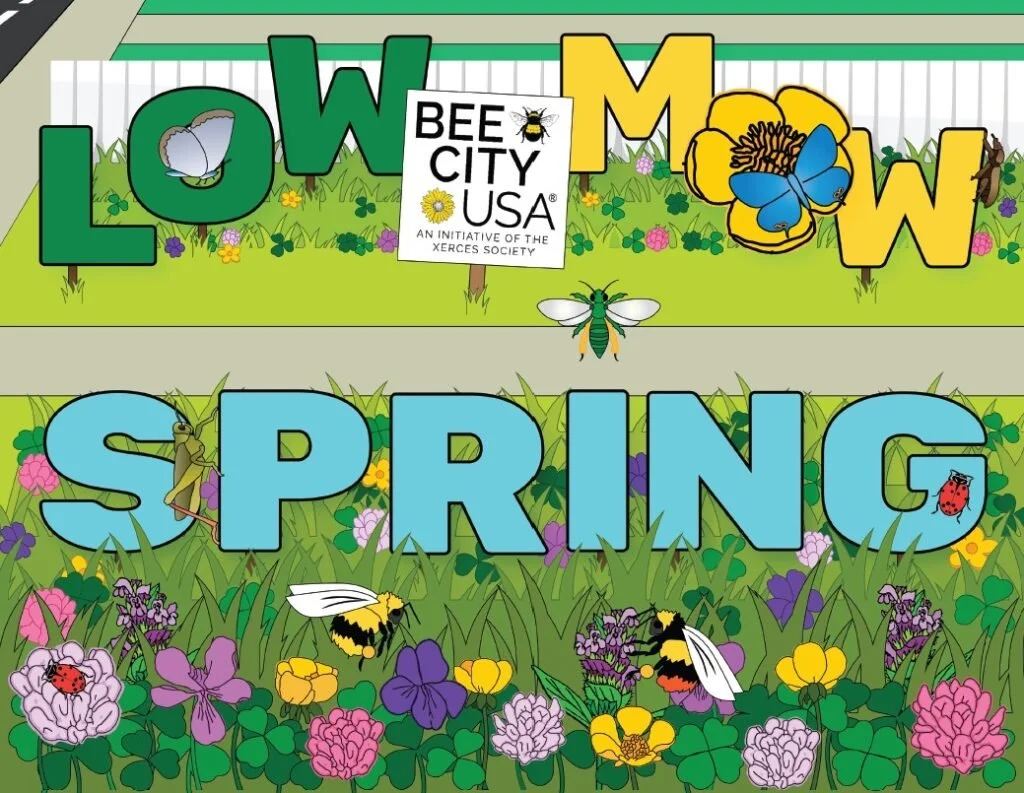
Raleigh, NC, strengthened pollinator habitat through its Low-Mow Spring initiative, removing 98 acres from mowing to protect early-season forage and nesting opportunities for pollinators across parks and greenways.
Kansas City, MO
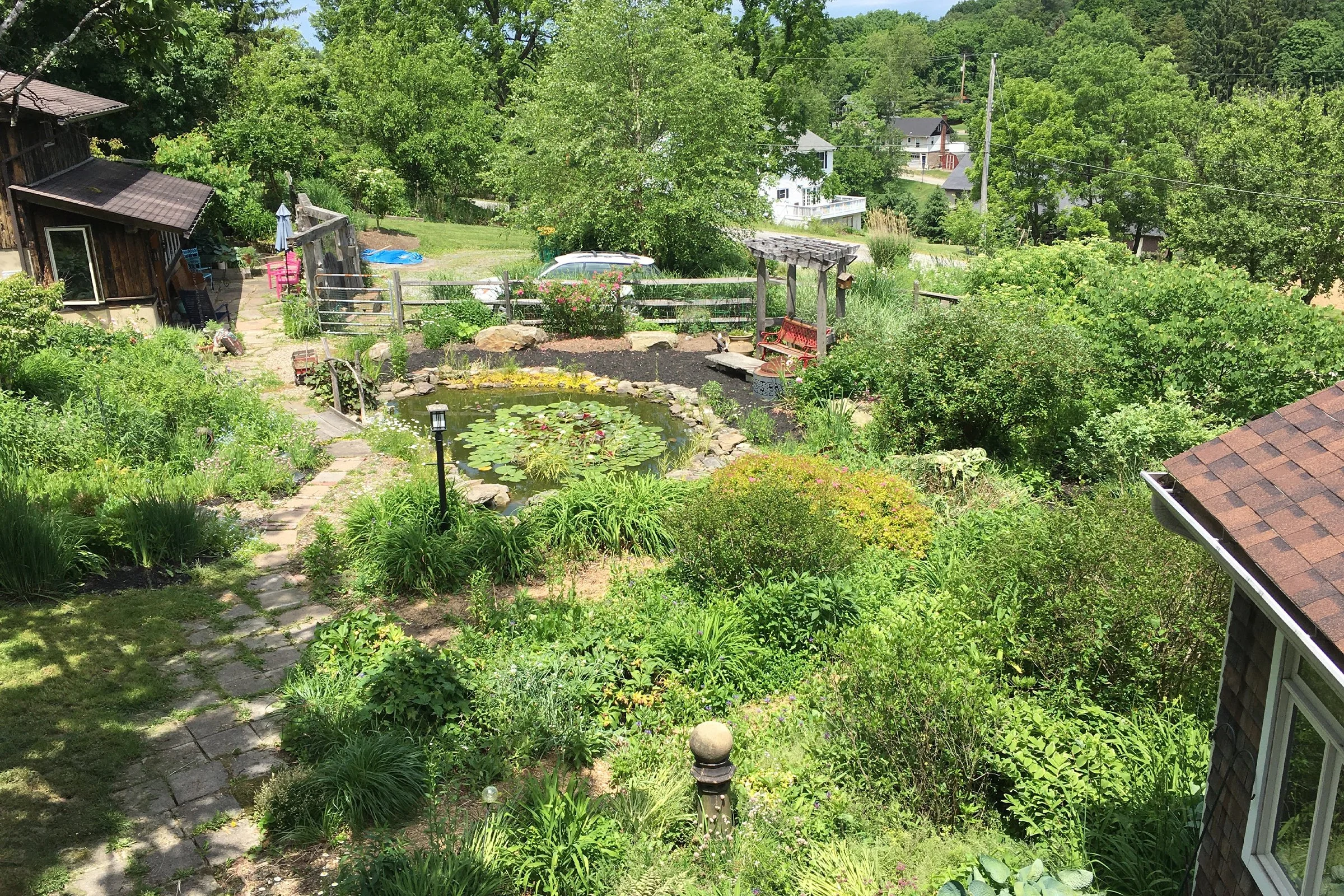
Kansas City, MO, supported biodiversity through nuisance code amendments allowing managed natural landscapes, explicitly legalizing native plantings and ecological landscaping in residential areas, and reducing regulatory barriers to urban habitat creation.
Pittsburgh, PA
The Pittsburgh City Council unanimously approved legislation exempting registered native, rain, and pollinator gardens from residential plant-height limits, allowing plants to grow beyond the city’s previous 10-inch cap. This change promotes biodiversity, improves air and water quality, reduces stormwater runoff, and helps residents better connect with nature while addressing climate change.
Challenge 2: Creating a Movement
“To create and support the capacity of a generative social impact network that includes public and private partners to implement the concepts of biophilic planning and design in the form of adopted policy and practice.”
Reston, VA
Reston, VA, reactivated community-led canopy expansion through the Friends of Trees Donation Program, enabling residents to directly fund and plant native trees as part of Reston’s Sustainability and Climate Resilience Plan.
San Francisco, CA
San Francisco, CA, strengthened cross-sector collaboration through the Reimagining San Francisco Alliance, convening more than 60 organizations around shared data, funding, and coordinated biophilic action.
Toronto, Canada
Toronto, Canada expanded civic stewardship through the InTO the Ravines Champions Program, training residents and providing microgrants to lead nature-based events across the city’s ravine system.
Phipps Conservatory and Botanical Gardens, Pittsburgh, PA
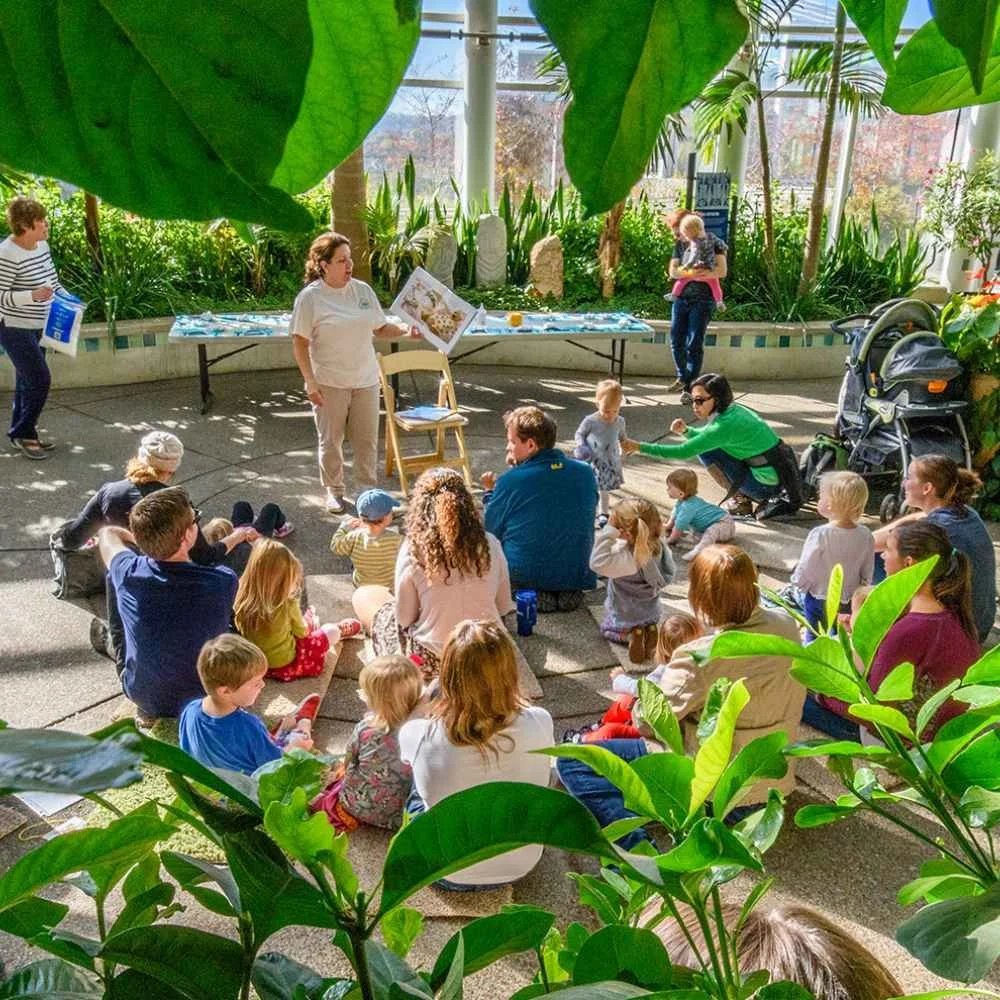
Phipps Conservatory and Botanical Gardens built a sustained biophilic movement through monthly Biophilia Meet-Ups, science education programs serving over 5,800 children annually, and the launch of the Nature Talks speaker series, extending biophilic learning through both in-person and virtual formats.
Birmingham, UK
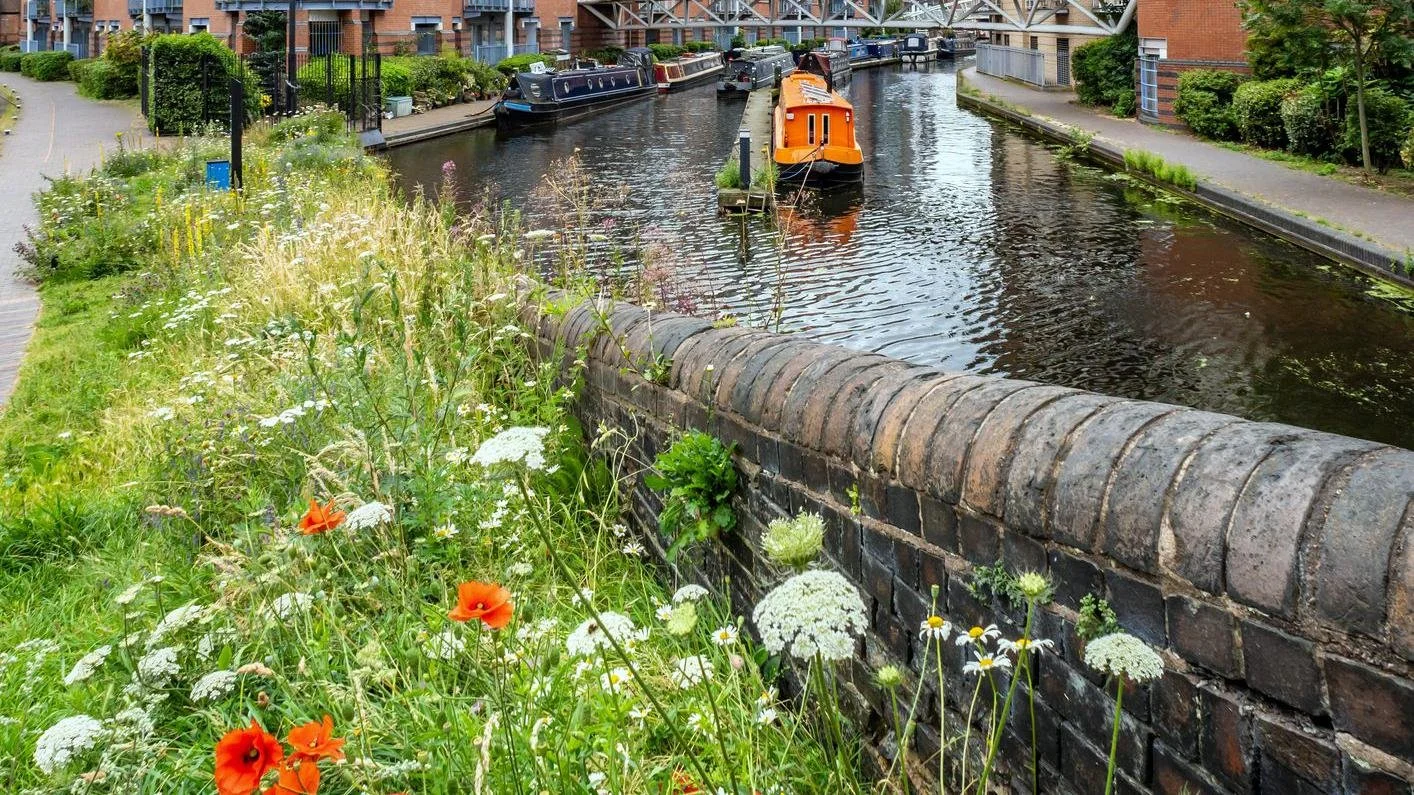
Birmingham, UK, has been named the UK’s first official “Nature City” as part of a national program led by Natural England, the National Trust, and the National Lottery Heritage Fund to improve access to green space in urban areas. The designation recognizes the city’s long-term City of Nature plan and its efforts to expand biodiversity, restore historic sites, and create community green spaces that support public health and climate resilience.
Challenge 3: Ecological Wonder
“To invite appreciation of the intangible qualities of nature across the urban landscape through education, art and experiences that inspire a sense of awe, a connection to the larger world, and a stewardship responsibility.”
Toronto, Canada
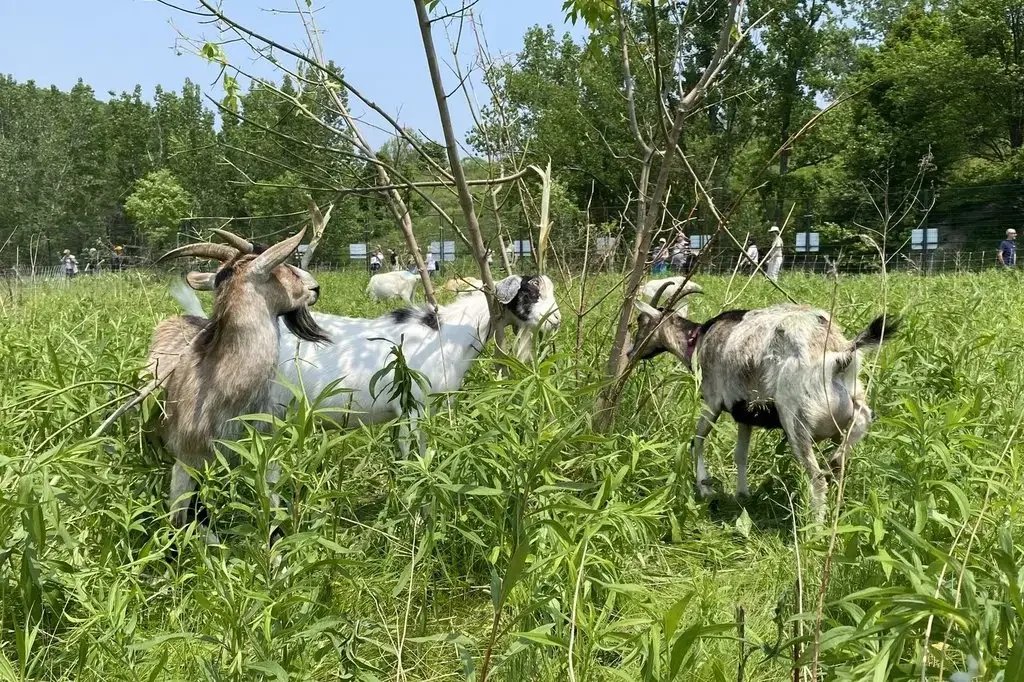
Toronto, Canada, fostered ecological wonder through prescribed goat grazing at Don Valley Brick Works Park, making ecosystem management processes visible and engaging in a highly visited urban landscape.
Vitoria-Gasteiz, Spain
Vitoria-Gasteiz, Spain, enhanced everyday experiences of nature through Medieval Quarter naturalization, introducing planters, microhabitats, and street greening co-designed with residents in the city’s historic core.
Arlington County, VA
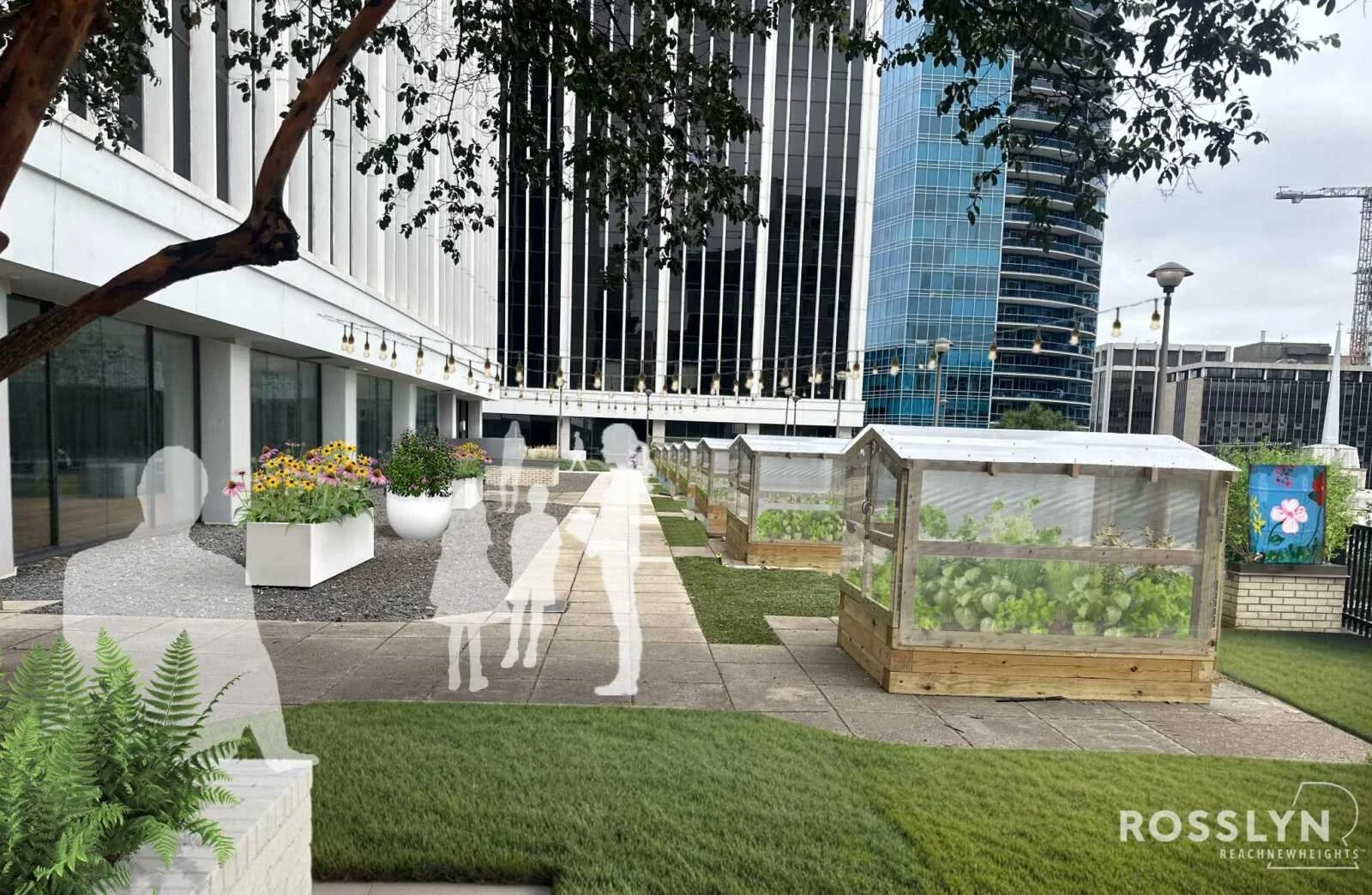
Arlington County, VA, created immersive urban nature experiences through the NOW Pop-Up Grown Zone in Rosslyn, transforming an underused rooftop terrace into a temporary public garden with pollinator beds and community programming.
Challenge 4: Equitable Access to Nature
“To ensure that nature is equitably accessible for all citizens across the urban landscape by bridging both physical and psychological barriers; to increase access in communities where access to nature has historically been the most limited and where increased access to nature can have the greatest impact.”
Raleigh, NC
Raleigh, NC, expanded equitable access to nature-based infrastructure by applying its Green Stormwater Infrastructure Evaluation Policy to city-led projects, including affordable housing developments.
Kansas City, MO
Kansas City, MO, reduced regulatory barriers to neighborhood nature through managed natural landscape provisions in its nuisance code, expanding access to native planting and ecological landscapes in residential areas.
Challenge 5: Flourishing Health and Wellbeing
“To build consensus that daily contact with nature is an essential element of positive health and wellbeing, longevity, and quality of life; to support documentation that enabling engagement with nature is a cost-effective investment in preventative health.”
Raleigh, NC
Raleigh, NC, promoted wellbeing through the Nature Quest Passport Program, encouraging residents to visit and engage with local nature preserves while strengthening awareness of urban ecosystems.
Toronto, Canada
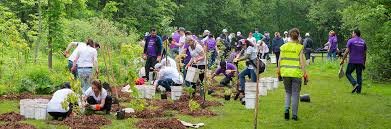
Toronto, Canada, supported health and social connection by engaging approximately 10,000 residents in tree planting, stewardship, and outreach activities throughout 2025.
Pittsburgh, PA
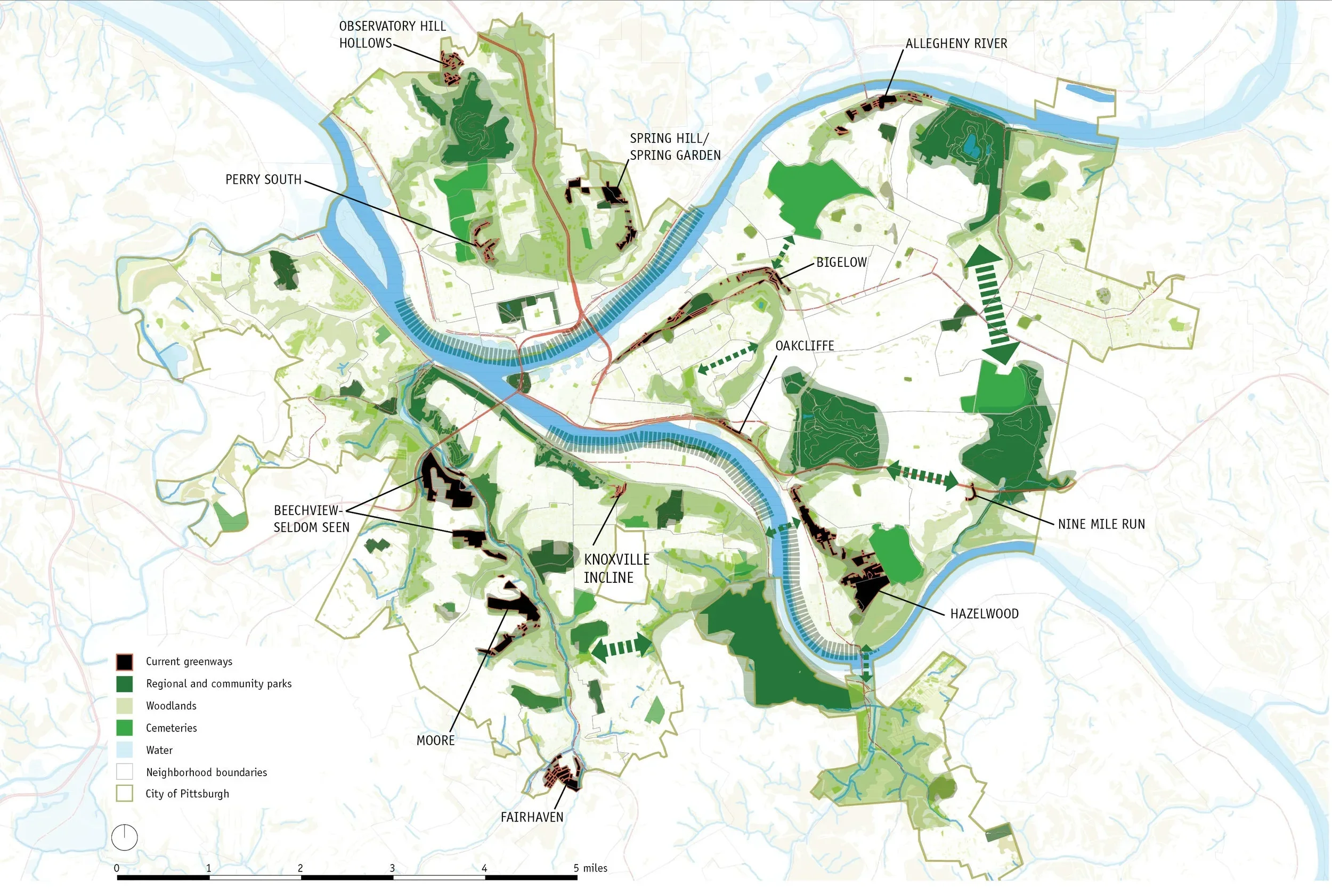
Pittsburgh, PA, advanced health and resilience by expanding citywide greenways, converting approximately 2,500 acres of vacant and landslide-prone land into permanently conserved open space.
Challenge 6: Markets for Social Impact
“To support broad investment in natureful cities by diversifying public and private participants; to communicate the socioeconomic benefits of biophilic planning and design, the establishment of standards and metrics; to transform the underlying legal, cultural, and social systems in order to prioritize, encourage, and incentivize investment in biophilic planning and design.”
San Francisco, CA
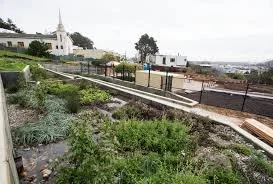
San Francisco, CA, advanced large-scale nature investment through the SFPUC Green Infrastructure Program, deploying more than 470 projects that capture an estimated 290 million gallons of stormwater annually.c
Phipps Conservatory and Botanical Gardens, Pittsburgh, PA
Phipps Conservatory and Botanical Gardens, Pittsburgh, PA scaled global biophilic impact through the Climate Toolkit, now used by over 250 institutions in 30 countries, collectively serving more than 123 million annual visitors and embedding nature-based climate action across cultural institutions worldwide.
Singapore
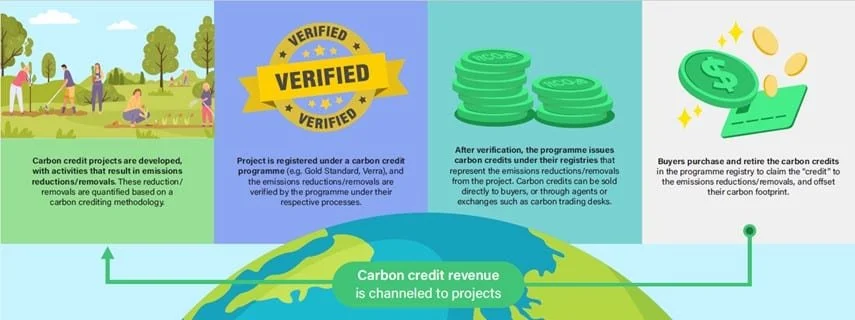
Singapore announced it will procure 2.175 million tons of high-quality nature-based carbon credits from four projects in Ghana, Peru, and Paraguay to help meet its 2030 climate targets under the Paris Agreement. The project focuses on forest protection, reforestation, and sustainable land management, while delivering biodiversity benefits and economic support for local communities.
Challenge 7: Nature-Based Resilient Communities
“To enable community and ecosystem sustainability through nature-based solutions to the conditions of changing climate, environmental degradation, natural disaster, and social unrest.”
Arlington County, VA
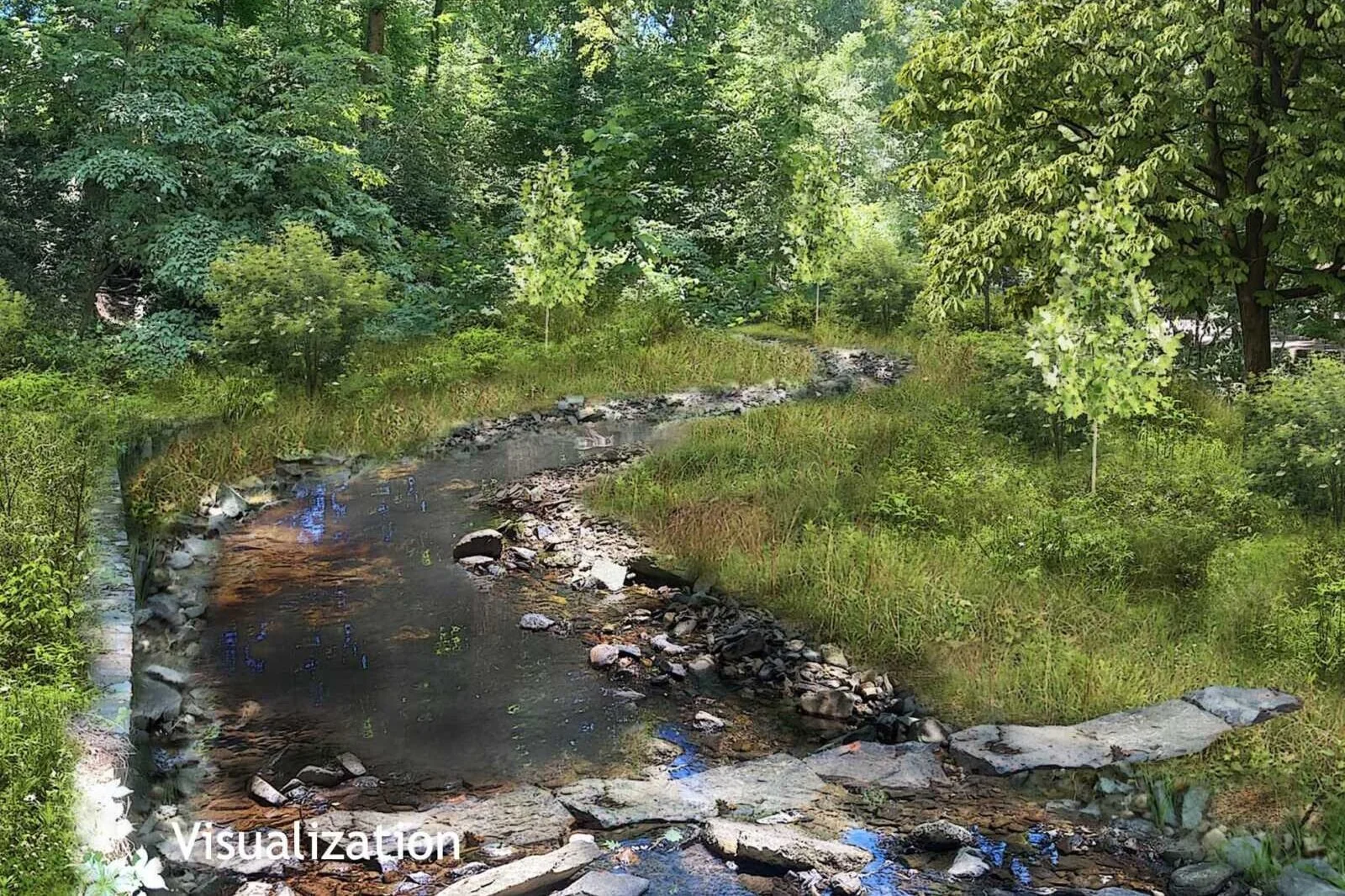
Arlington County, VA, improved climate resilience through the Gulf Branch Stream Restoration Project, stabilizing streambanks, enhancing habitat, and reducing flood risk through nature-based design.
Norfolk, VA
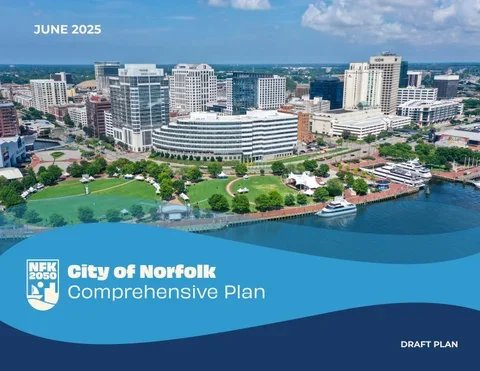
Norfolk, VA, advanced coastal resilience through the adoption of NFK2050, embedding “Embracing Nature” as a core planning pillar focused on green and blue infrastructure, flood protection, and long-term climate adaptation.
San Francisco, CA
San Francisco, CA, strengthened climate adaptation through the “3500 Trees” initiative, prioritizing tree planting in low-canopy neighborhoods as public climate infrastructure.
Challenge 8: Symbiotic Built Environment
“To foster the design of living architecture by integrating nature directly and indirectly into the fabric of urban infrastructure; to aim to create a personal and collective connection with the built environment with resulting identifiable, positive impacts on social cohesion, productivity, and wellbeing.”
Arlington County, VA
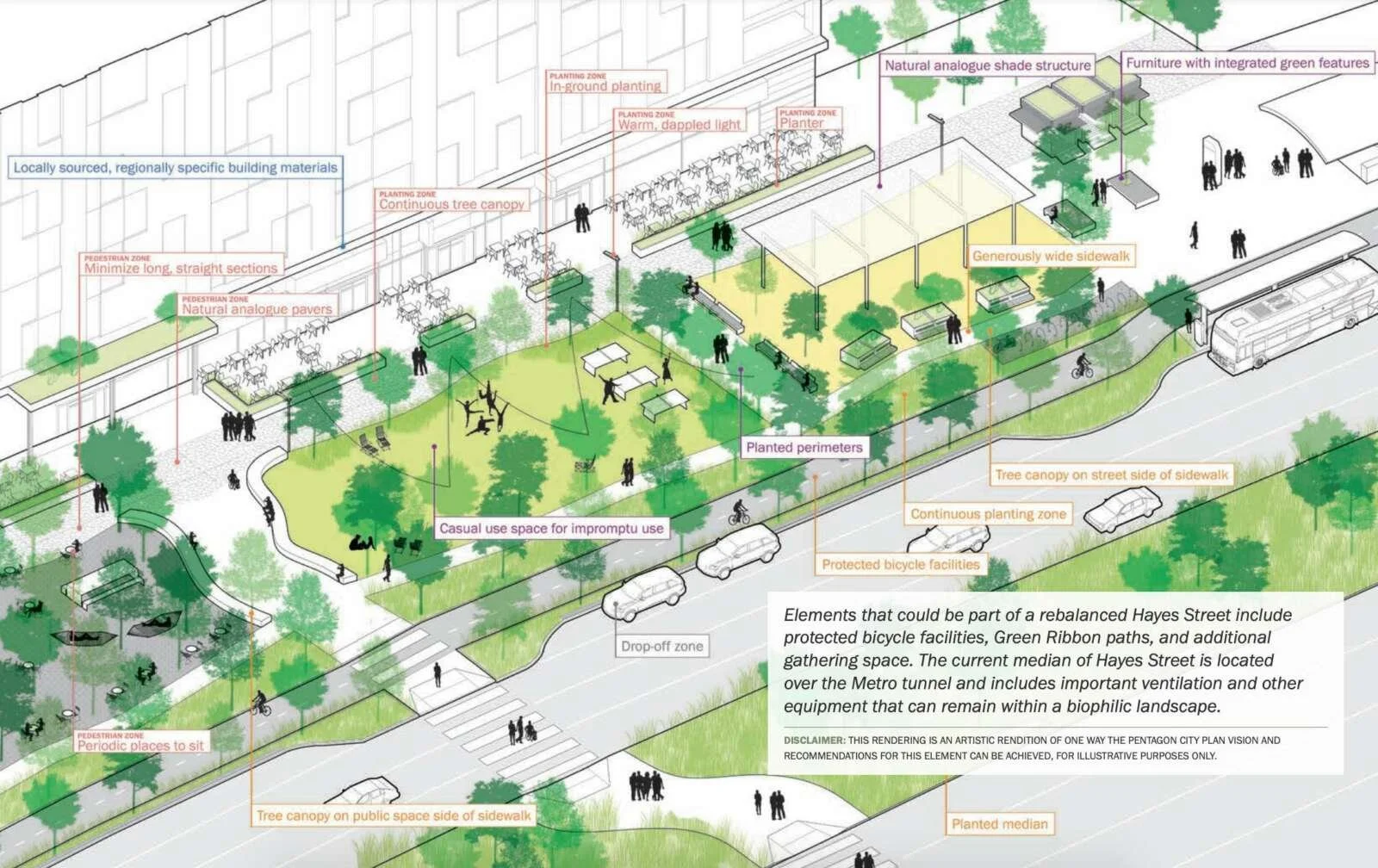
Arlington County, VA, embedded nature into dense urban form through green ribbon connectivity in Pentagon City, linking development sites with planted corridors, rooftop landscapes, and pedestrian networks.
Toronto, Canada
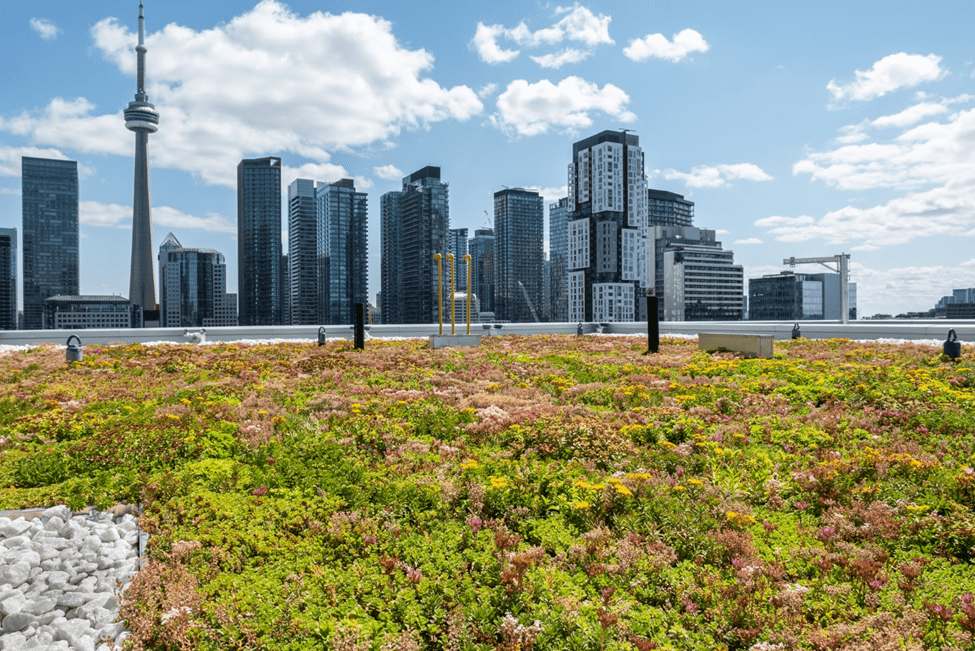
Toronto, Canada, integrated biophilia into architecture through downtown green roof installations, adding 245 green roofs in the year 2025. This intervention demonstrates how buildings can support biodiversity and climate goals.
San Francisco, CA
San Francisco, CA, advanced nature-forward urban design through the adoption of Biodiversity Guidelines, promoting native planting, bird-safe design, and living roofs across public and private development.